Stress Management
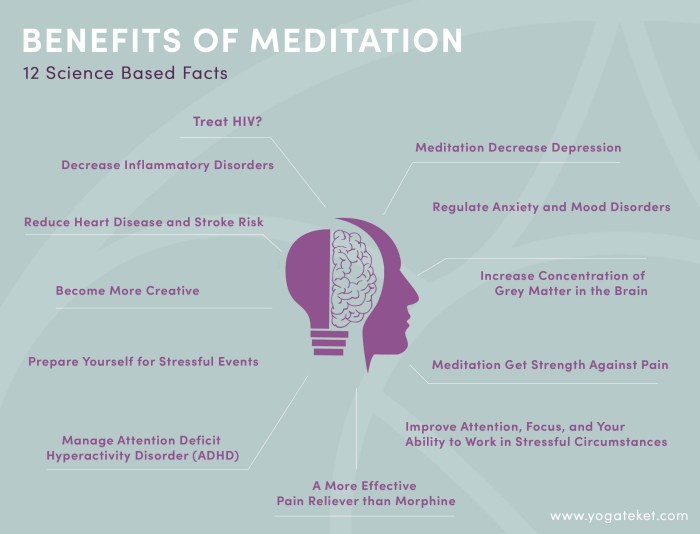
Benefits of meditation for mental clarity – Meditation has been proven to be a powerful tool in managing stress levels effectively. By practicing meditation regularly, individuals can learn to calm their minds, focus on the present moment, and reduce the impact of stress on their mental well-being.
Meditation Techniques for Stress Reduction
- 1. Mindfulness Meditation: This technique involves focusing on the present moment without judgment. By being aware of your thoughts and feelings, you can reduce stress and anxiety.
- 2. Deep Breathing: Deep breathing exercises help to calm the mind and body, reducing stress levels. By taking slow, deep breaths, individuals can release tension and promote relaxation.
- 3. Loving-Kindness Meditation: This practice involves sending love and compassion to oneself and others. By cultivating feelings of kindness, individuals can reduce negative emotions associated with stress.
Impact of Regular Meditation on Stress Resilience
Regular meditation has been shown to increase overall stress resilience. By training the mind to focus and be present, individuals develop a greater ability to cope with challenging situations and reduce the negative effects of stress on their mental health.
Healthy Lifestyle
Integrating meditation into daily routines can significantly contribute to a healthier lifestyle by promoting overall well-being and balance.
Connection between Meditation and Healthier Lifestyle Choices
Meditation can help individuals make healthier lifestyle choices by increasing self-awareness, reducing stress levels, and enhancing mindfulness. This heightened awareness can lead to better decision-making regarding exercise, nutrition, and overall health.
Benefits of Combining Meditation with Exercise and Nutritious Eating Habits
- Mental Clarity: Meditation can improve focus and mental clarity, enhancing performance during physical activities and aiding in making healthier food choices.
- Stress Reduction: By incorporating meditation into exercise routines, individuals can better manage stress levels, leading to a more balanced approach to fitness and overall well-being.
- Emotional Balance: Meditation can help regulate emotions, reducing the likelihood of emotional eating or engaging in unhealthy habits in response to stress or negative feelings.
- Mindful Eating: Practicing mindfulness through meditation can promote mindful eating habits, allowing individuals to savor and appreciate their food, leading to better digestion and nutrient absorption.
- Self-Discipline: Regular meditation practice can enhance self-discipline, motivating individuals to stick to their exercise regimens and make healthier food choices consistently.
Medical Innovations
Meditation is increasingly being integrated into medical treatments to promote mental clarity and overall well-being. This ancient practice is proving to be a valuable tool in healthcare settings for addressing mental health concerns.
Research Backing
- One study published in JAMA Internal Medicine found that mindfulness meditation can help reduce symptoms of anxiety, depression, and pain.
- Another research conducted at Harvard Medical School showed that meditation can lead to changes in brain regions associated with memory, sense of self, empathy, and stress regulation.
- A systematic review in the Journal of the American Medical Association (JAMA) Psychiatry revealed that mindfulness meditation interventions can improve depression, anxiety, and pain in patients.
Integration in Healthcare
- Hospitals are incorporating mindfulness programs to help patients manage stress, anxiety, and pain before and after medical procedures.
- Psychiatrists are recommending meditation as an adjunct therapy for individuals with mood disorders, PTSD, and other mental health conditions.
- Healthcare providers are utilizing meditation apps and online resources to support patients in cultivating mindfulness practices for mental well-being.
Nutritional Supplements
Meditation and nutritional supplements play a crucial role in enhancing mental clarity and overall well-being. Let’s explore how meditation complements the effects of nutritional supplements on mental clarity and cognitive enhancement.
Synergy between Meditation and Specific Supplements
When combined with meditation, certain nutritional supplements can have a synergistic effect on cognitive enhancement. For example, omega-3 fatty acids, commonly found in fish oil supplements, have been linked to improved brain function and mental clarity. When taken alongside a regular meditation practice, these supplements can further enhance focus, memory, and overall cognitive function.
Optimizing Absorption and Utilization of Supplements
Meditation can also play a role in optimizing the absorption and utilization of nutritional supplements for mental wellness. By reducing stress and promoting a sense of calm, meditation creates an ideal environment for the body to effectively absorb nutrients from supplements. Additionally, mindfulness practices during meditation can help individuals become more attuned to their body’s needs, making them more likely to adhere to a consistent supplement regimen for optimal mental clarity and overall health.
Fitness Routine
Meditation plays a crucial role in enhancing focus and mental clarity during fitness routines. It can also significantly improve motivation and consistency in maintaining a fitness regimen.
Relationship between Meditation and Focus in Workouts
Research has shown that incorporating meditation into a fitness routine can help individuals stay present and focused during their workouts. By practicing mindfulness techniques, such as deep breathing and body awareness, individuals can enhance their concentration and optimize their performance.
Improving Motivation and Consistency, Benefits of meditation for mental clarity
Meditation can also improve motivation and consistency in maintaining a fitness regimen by reducing stress and increasing mental resilience. By cultivating a sense of inner peace and clarity through meditation, individuals are more likely to stay committed to their fitness goals and overcome obstacles along the way.
Positive Impact on Physical Performance
Studies have demonstrated that regular meditation practice can lead to improved physical performance during workouts. By calming the mind and reducing distractions, individuals can achieve a state of flow where they are fully engaged in their exercise routine. This enhanced focus can result in better coordination, endurance, and overall performance.
Health Screenings
Meditation can play a significant role in improving outcomes in health screenings related to mental health. By incorporating meditation practices before health screenings, individuals can experience mental clarity and emotional balance, which can positively impact their overall well-being.
Benefits of Incorporating Meditation Before Health Screenings
- Reduces stress and anxiety: Meditation helps individuals calm their minds and reduce stress levels, allowing them to approach health screenings with a clear and focused mindset.
- Enhances mental clarity: By practicing meditation, individuals can improve their cognitive function and concentration, leading to better decision-making and understanding of health screening procedures.
- Promotes emotional stability: Meditation can help individuals regulate their emotions and maintain a sense of calmness, which is beneficial in facing the uncertainties of health screenings.
Disease Prevention
Regular meditation can play a crucial role in preventing mental health conditions and diseases by promoting overall mental clarity and reducing stress levels. The practice of meditation has been linked to improved cognitive function, emotional regulation, and increased focus, all of which contribute to better mental well-being and resilience against various illnesses.
Enhanced Mental Clarity
- Meditation helps clear the mind and improve concentration, which can aid in decision-making and problem-solving.
- By reducing mental clutter and promoting a sense of calm, meditation can enhance cognitive function and memory retention.
- Improved mental clarity through meditation can also lead to better self-awareness and emotional stability, reducing the risk of mental health disorders.
Stress Reduction
- Chronic stress is a known risk factor for numerous health conditions, including heart disease, diabetes, and hypertension.
- Regular meditation practice has been shown to lower stress hormones like cortisol, leading to a decrease in overall stress levels.
- By managing stress effectively, meditation can help prevent the onset of stress-related illnesses and support overall health and well-being.
Sleep Hygiene
In today’s fast-paced world, getting quality sleep is essential for overall well-being. Sleep hygiene plays a crucial role in ensuring restful and rejuvenating sleep. Let’s explore how meditation practices can enhance sleep quality and promote mental clarity.
Connection between Meditation and Healthy Sleep Habits
- Meditation promotes relaxation: Engaging in meditation techniques before bedtime can help calm the mind and body, making it easier to fall asleep.
- Establishing a bedtime routine: Incorporating meditation into your nightly routine signals to the body that it’s time to wind down and prepare for sleep.
- Reducing stress and anxiety: Meditation can help alleviate stress and anxiety, which are common culprits of sleep disturbances.
Using Meditation for Addressing Sleep Disturbances
Mindfulness meditation has been shown to improve sleep quality and reduce insomnia symptoms.
- Focus on the present moment: Mindfulness meditation teaches individuals to focus on the present moment, letting go of worries that may disrupt sleep.
- Breathing exercises: Deep breathing techniques practiced during meditation can help relax the body and prepare it for sleep.
- Body scan meditation: This practice involves systematically scanning the body for tension and releasing it, promoting physical relaxation conducive to sleep.
Enhancing Cognitive Function through Meditation
- Improved concentration and memory: Quality sleep obtained through meditation can enhance cognitive functions such as concentration and memory retention.
- Emotional regulation: Better sleep resulting from meditation practices can lead to improved emotional regulation and decision-making abilities.
- Increased energy levels: Restful sleep achieved through meditation can boost energy levels and overall productivity during waking hours.
Mental Clarity
Mental clarity refers to the state of having a clear and focused mind, free from distractions or confusion. Meditation plays a crucial role in achieving and maintaining mental clarity by calming the mind, reducing stress, and improving cognitive function.
Enhanced Focus and Concentration
Through regular meditation practice, individuals can enhance their ability to focus on tasks at hand and maintain concentration for longer periods. By training the mind to be present in the moment, meditation helps reduce mental clutter and improves the ability to prioritize and stay focused.
Improved Mental Acuity
Meditation has been shown to enhance mental acuity by sharpening cognitive function and improving decision-making skills. By promoting mindfulness and awareness, meditation helps individuals think more clearly, make sound judgments, and process information more effectively.
Long-Term Effects on Cognitive Function
Studies have indicated that long-term meditation practice can lead to structural changes in the brain that are associated with improved cognitive function and mental clarity. Regular meditation has been linked to increased gray matter density in areas of the brain responsible for memory, learning, and emotional regulation, which can have lasting effects on mental sharpness and clarity.
Hydration Importance
Staying hydrated is crucial for maintaining optimal brain function and mental clarity. Dehydration can negatively impact cognitive abilities and overall brain health.
Relationship between Hydration and Mental Clarity
- Hydration plays a key role in supporting cognitive function by ensuring proper circulation of nutrients and oxygen to the brain.
- When the body is dehydrated, brain cells are deprived of essential elements, leading to decreased focus, memory, and overall mental performance.
- Drinking an adequate amount of water throughout the day can help enhance mental clarity and concentration.
Impact of Hydration on Cognitive Function and Brain Health
- Proper hydration is essential for maintaining the structure and function of brain cells, as well as supporting neurotransmitter production.
- Dehydration can impair neurotransmitter function, affecting mood regulation and cognitive processes.
- Research has shown that even mild dehydration can lead to cognitive decline, emphasizing the importance of staying hydrated for optimal brain health.
Role of Hydration in Supporting Meditation Benefits for Mental Clarity
- Hydration complements the benefits of meditation by promoting a clear and focused mind, allowing individuals to fully engage in their practice.
- Drinking water before meditation can help enhance mindfulness and concentration, facilitating a deeper state of relaxation and mental clarity.
- Combining hydration with meditation can create a synergistic effect, improving overall cognitive function and emotional well-being.
Q&A: Benefits Of Meditation For Mental Clarity
How often should I meditate for mental clarity?
It is recommended to meditate for at least 10-20 minutes daily to experience the benefits of enhanced mental clarity.
Can meditation help with decision-making skills?
Yes, regular meditation practice can improve cognitive function and sharpen decision-making abilities by enhancing mental clarity.
Is there a specific time of day that is best for meditation?
The best time to meditate is subjective and varies for each individual. Experiment with different times to find what works best for you in achieving mental clarity.